
Climate Week NYC 2026: It's time for business to step up
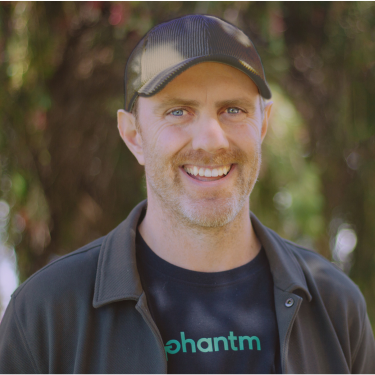
I have just returned from New York Climate Week. And, in coming home, I am both frightened and more determined than ever.
We are living through a complete systems collapse. Nature, water, energy, agriculture and (most concerningly) trust are all under strain at once. Each crisis feeds the next. And yet, session after session I attended, the dominant question was how to power AI data centres - even in the halls of the UN, where government leaders have failed to regulate this technology.
Honestly, it should have been branded 'New York AI Week'.

The future arrived all at once
AI is not separate from the climate crisis. It is rapidly becoming part of it.
One estimate shared during the week suggested that $700 billion will be spent building data centres over the next few years. That build-out demands enormous quantities of energy and water. We heard about new cooling systems, cleaner chips and the possibility that AI could make our grids smarter. We also heard that 70% of Americans do not want AI data centres in their backyard.
That contradiction ran through the week. AI may help us model forests, process vast amounts of climate and biodiversity data, improve products and manage energy demand. It may also consume enough energy to burn parts of those same forests. If we embed AI across the global economy without changing how it is powered, instead of a green revolution, we will get a 'brown boost'.
As one speaker put it: the future used to arrive gradually. Now it arrives all at once.
We cannot innovate our way around hard choices
The technology sector wants us to believe that every problem can be solved by the next breakthrough. I hope some of them can. But hope is not a strategy, and innovation does not release us from responsibility.
At one session, Nvidia’s Head of Sustainability argued that slowing AI could slow our transition to net zero. The theory is that new demand can accelerate clean-energy investment and help modernise the grid. Elsewhere, leaders spoke about nuclear power, advanced geothermal, closed-loop water systems and data centres acting as responsible corporate citizens by supporting the grids and communities around them.
These are important ideas. But they do not answer the fundamental question: what are we prioritising, and who gets to decide?
Saul Griffith was one of very few people I met who is thinking and acting with the urgency required. His warning was blunt. AI investments offering returns of 10–15% or more are cannibalising climate investments such as rebuilding the electrical grid, where returns may sit closer to 5–7%. Capital will always chase the bigger number unless we deliberately change the incentives.
Meanwhile, 2.5 billion people are still not connected to the internet. How can we speak confidently about a prosperous AI future when around a third of the world’s population is not even online? Will AI be the great equaliser, or will it simply extrapolate the inequalities already in play?
Our institutions will not save us
By the end of the week a harsh truth dawned on me: our political systems and institutions will not save us. They are slow, short-term and self-serving.
Inside conference rooms, the science was described as clear and the data was even clearer. The problem, apparently, is translation.
I disagree.
We do not lack information. We lack the political will and courage to act on what we already know.
Ryan Gellert, CEO of Patagonia, said that apathy sits at the heart of our political crisis. I think he is right. Too many corporate leaders are anxious about speaking out. Too many governments remain trapped by election cycles. And too many institutions publish commitments whose deadlines sit safely beyond the tenure of anyone making them.
Business leaders should not pretend to be experts on everything. But, as Ryan argued, people are at their best when they speak on issues where they have authenticity and knowledge. If your business depends on a stable climate, healthy communities, functioning infrastructure or living ecosystems, this is your issue and this is the time to step up.
Change will come from activists, community organisers and business leaders willing to act before they are forced to.
Our last best chance
Fittingly, on the final day, a major storm rolled into New York, causing everyone to scramble out of the city. Mother Nature did not want to wait for the panels to wrap up.
On my flight home I rewatched Interstellar. And I must confess, I shed more than one tear. Matthew McConaughey’s character, Cooper, says: “It’s a perfect planet, and we’re not gonna find another one like her.”
That line stayed with me, as did the words of Dr Sylvia Earle, a 91-year-old marine biologist who is remarkably still working through Mission Blue: “This is the last best chance we have to save our planet. And we have five years, no longer. Which makes it an exciting time to be alive.”
I believe her.
The storm has already arrived. Time to get to work.
See how Phantm structures your packaging data.
Talk to our team to walk through supplier collection, validation and reporting.