
The beauty packaging data to check before reformulation

Reformulation is a familiar part of beauty product development, and it creates a natural point to review the packaging record before a revised SKU reaches production.
A formula change may lead to a new tube, closure, applicator or supplier. Even when the pack appears unchanged, the team still needs to confirm which specifications remain valid.
Before approval, the brand needs a component-level record that connects every packaging part with its material, weight, supplier and evidence. This gives packaging, quality and sustainability teams a dependable basis for comparing options, briefing suppliers and preserving the record for later reporting.

Beauty packaging data needs to describe every part
A beauty product can contain several packaging components, each with its own specification and evidence. One example published by Phantm contains:
- Pump made from polypropylene, 3.4 g
- Aluminium collar, 1.1 g
- Glass bottle, 88 g
- Polypropylene film label, 0.6 g
- Carton-board insert, 2.2 g
- Folding boxboard carton, 14 g
Together, those six components weigh 109.3 g. Recording the SKU as a glass bottle would capture its heaviest item while leaving the closure, label and secondary packaging poorly described.
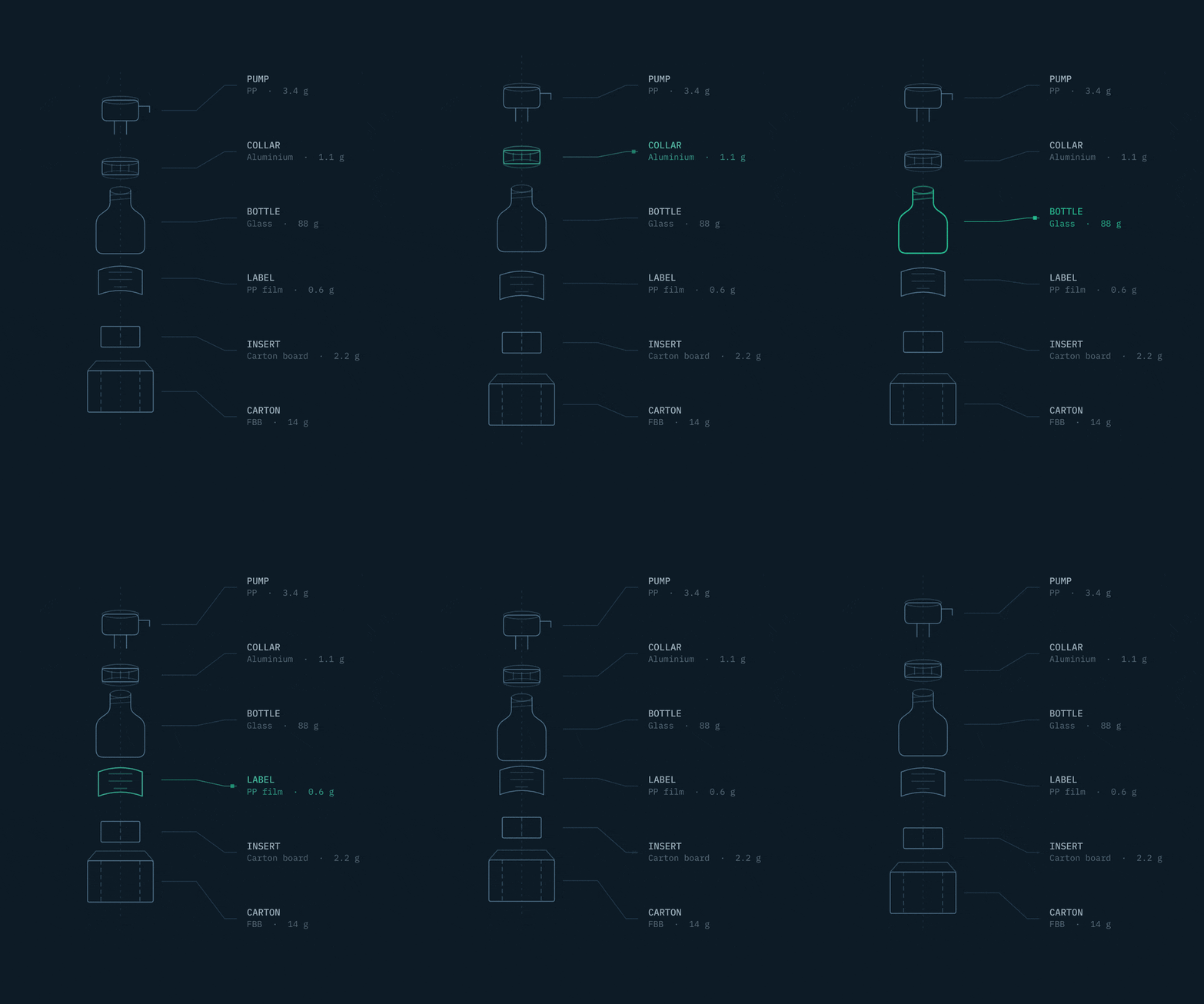
Each component can also change independently. A pump supplier may alter a resin grade. A label specification may change while the bottle remains the same. A single flat packaging field cannot show all of these relationships clearly, including which value changed, who confirmed it and which document supports the new specification.
Reformulation should trigger a packaging data check
Not every formula change requires new packaging. Every reformulation should still trigger a deliberate check of the packaging record before approval.
For each component, the team should confirm:
- Whether it has changed, been added or been removed
- The current material, format and weight
- The supplier responsible for the specification
- The specification sheet, certificate or declaration supporting the value
- Which packaging reviews, claims or reports may be affected
This creates a controlled update and reduces later reconstruction through inboxes and spreadsheets. The unchanged components can be confirmed, while affected components receive new evidence and an updated version.
For Accord members, it is also important to keep chemical and packaging records distinct. The Australian Industrial Chemicals Introduction Scheme, or AICIS, replaced NICNAS in 2020 and regulates industrial chemical introductions, including cosmetic ingredients. AICIS explicitly does not regulate product packaging. APCO packaging reviews and annual reporting are a separate workflow where they apply.
The records can support related product decisions, but one should not be treated as a substitute for the other.
Evidence belongs with the component it supports
A material name or weight is only as useful as the source behind it. If the supporting specification remains in a buyer’s inbox or an unlabelled shared folder, the next reformulation team may struggle to tell whether the value is current.
Phantm’s current supplier workflow connects materials, weights and formats with the specification or certificate supporting each value. Suppliers review the components they provide, confirm or correct the prepared information and attach the proof in the same record.
Such a structure gives the brand a clearer review task. When a reformulation affects the closure, the team can update the closure record and preserve the confirmed bottle, label and carton information. It also exposes gaps before they become reporting problems.
Compare packaging options before production
The most useful packaging record informs the next decision as well as the next report.
In a Phantm blog post, MECCA described comparing glass, plastic and recharge options using environmental impact, water use and shipping inputs. That process made the assumptions and trade-offs visible while the product team could still act on them.
The same discipline applies to recycled-content, material and format changes. Start with a confirmed baseline, define the proposed specification and assess the cost and environmental indicators using clear boundaries. A recycled-content target alone does not establish the best outcome. The result depends on the component, material source, manufacturing assumptions and assessment scope.
This is where packaging data becomes an indispensable decision-making tool. The team can identify missing evidence, test the proposal and explain the trade-offs before issuing the purchase order or approving production.
Bring the packaging record into reformulation
Accord member formulating or reformulating a product? Talk to Phantm about building a component-level packaging record and assessing the change before you commit.
See how Phantm structures your packaging data.
Talk to our team to walk through supplier collection, validation and reporting.